

EXPLORE PRIVATE EQUITY:
Who they are, what they do and who funds who.
What Private Equity Actually Is
Private equity ("PE") firms are investment companies that pool money from pension funds, university endowments, insurance companies, and wealthy individuals, and then use that pool — combined with huge amounts of borrowed money — to buy entire companies. These acquisitions are called "leveraged buyouts" because most of the purchase price is financed by debt, and critically, that debt is loaded onto the acquired company itself, not the PE firm. The PE firm typically holds the business for three to seven years, aims to resell it at a profit, and along the way charges its investors a 2% annual management fee plus 20% of any profits (known as "carried interest"). On paper, this is supposed to reward firms that turn around struggling companies. In practice, it frequently rewards firms for stripping perfectly healthy companies for parts.
The core problem is the incentive structure. Because the acquired company carries the debt, the PE firm itself has little downside if the company collapses — it has already extracted management fees, "monitoring fees," "transaction fees," and often a "dividend recapitalization," which is when the firm forces the company to borrow even more money just to pay the PE owners a cash dividend. To service all that debt, portfolio companies typically slash payroll, cut benefits, defer maintenance, squeeze suppliers, outsource labor, and skimp on safety, compliance, and product quality. When the business eventually buckles under the debt load, workers lose jobs and pensions, vendors lose receivables, customers lose a trusted brand, and the PE firm walks away with its fees intact. This is why critics call the model "heads I win, tails you lose."
Why a lot of the Public Dislikes Them
The distaste for private equity is not abstract. Americans have watched it hollow out industries they rely on. PE ownership has been linked to measurably higher patient mortality in nursing homes, surprise medical bills in emergency rooms, mass closures of community hospitals, the collapse of retail chains that employed hundreds of thousands (Toys "R" Us, Payless, Sears, Randalls, RadioShack, Gymboree), soaring rents driven by institutional single-family home landlords, and the gutting of local newspapers. Meanwhile the industry enjoys the "carried interest" tax loophole that lets billionaire fund managers pay a lower tax rate than the nurses and teachers whose retirement money they manage. The opacity is its own offense: PE funds are not required to disclose what they own, what they charge, or how badly their portfolio companies are performing, which makes accountability nearly impossible until the bankruptcy filing hits the docket.
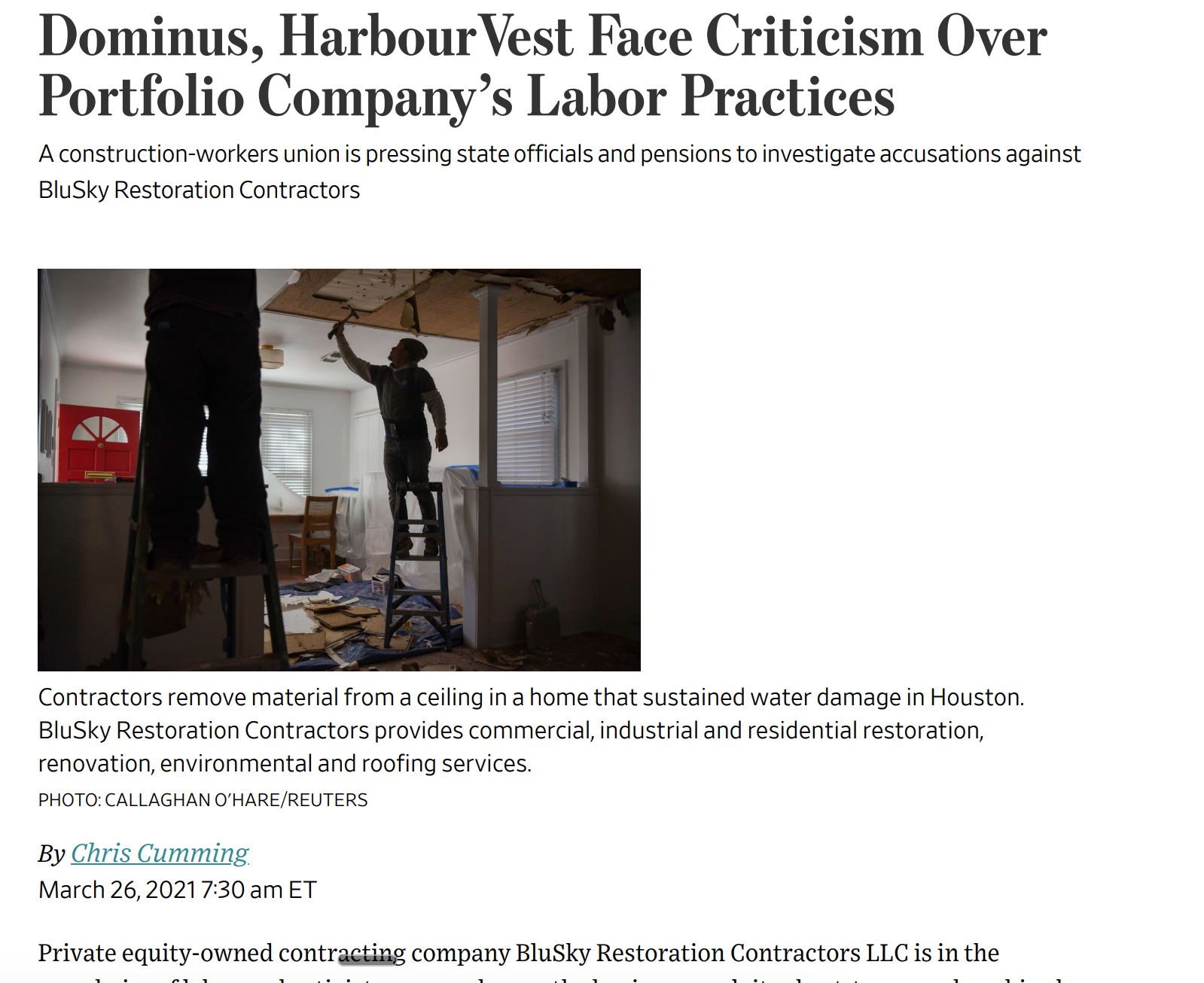
Houston Pension Article Below
Scandals and Legal Issues
KKR, Cornell Capital, HarbourVest, Constitution Capital
KKR & Co. is one of the largest and most-scrutinized PE firms in the world. It co-owned Toys "R" Us when that company collapsed in 2017, wiping out 33,000 jobs while KKR and its co-investors had already extracted hundreds of millions in fees. KKR-controlled Envision Healthcare became the face of the "surprise billing" crisis before collapsing into bankruptcy in 2023, leaving creditors and patients holding the bag. The SEC fined KKR $30 million in 2015 for misallocating "broken deal" expenses to its investors, and KKR portfolio companies have repeatedly drawn OSHA, EPA, and consumer-protection enforcement actions.
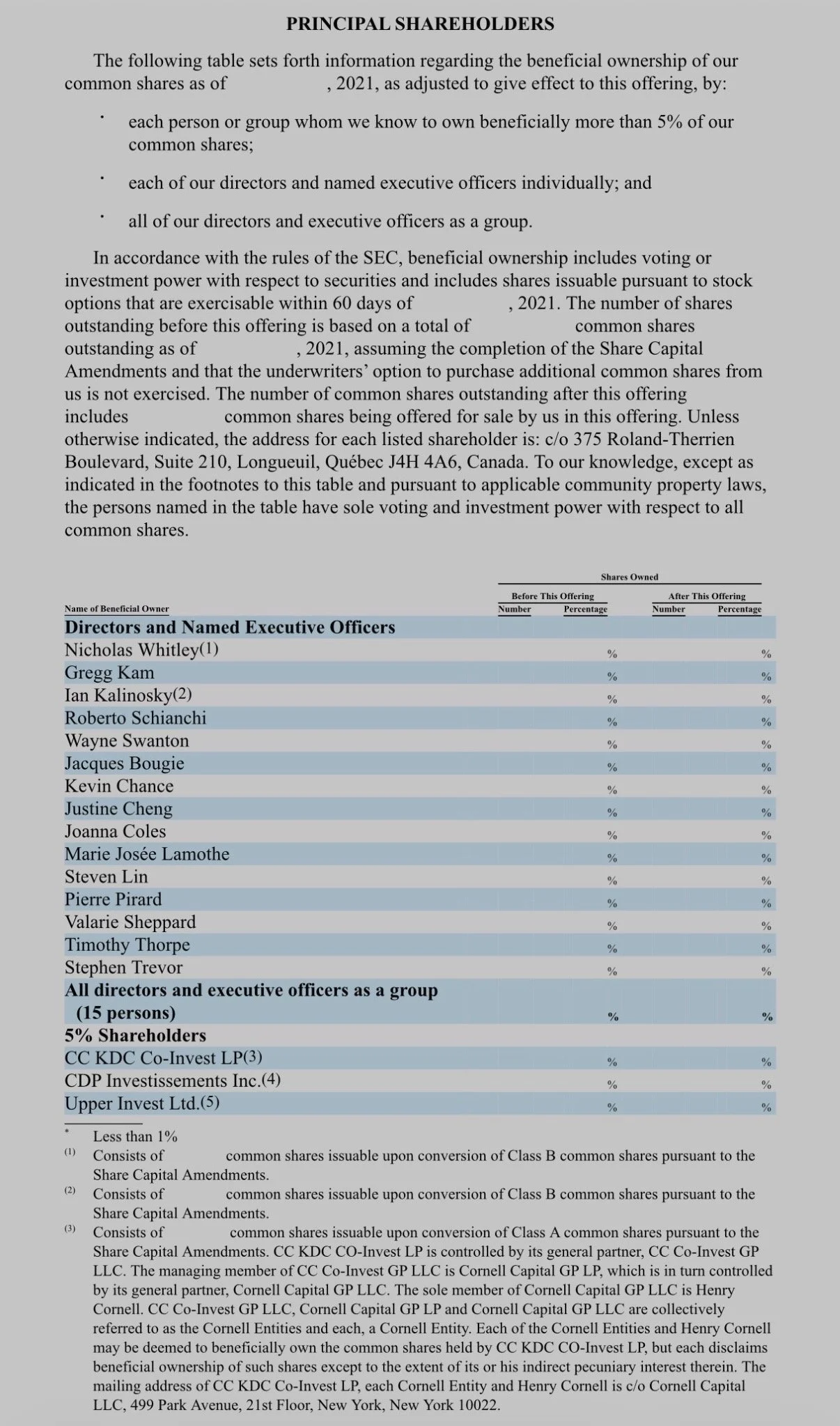
Cornell Capital LLC the firm founded by former Goldman Sachs partner Henry Cornell — has drawn criticism for aggressive consumer-finance and insurance-adjacent investments, and its portfolio companies have faced consumer-protection litigation and regulatory inquiries. (A separate, unrelated entity using the "Cornell Capital" name was the subject of a long-running SEC fraud action years ago; the name collision itself illustrates how PE firms operate behind a thicket of interchangeable LLCs.)
HarbourVest Partners, a Boston-based fund-of-funds manager with more than $100 billion under management, has faced sustained criticism for the layered-fee structure inherent in the fund-of-funds model (investors pay fees twice once to HarbourVest and again to each underlying fund) and for the opacity of its secondary-market deals, in which stakes in troubled portfolio companies are quietly rotated between funds to mask underperformance. It has also been pulled into disputes over pension-fund due diligence following the Silicon Valley Bank collapse and other blowups among companies in its downstream holdings.
Constitution Capital Partners, another Boston-based mid-market PE and co-investment manager, operates with the same fund-of-funds fee-stacking concerns and low transparency that plague the smaller end of the industry. Its lower public profile is not a virtue, it is a feature of a model that deliberately avoids the disclosure requirements applied to public-company owners, which is precisely how a company like Bayport Laboratories can be controlled, pressured for returns, and shielded from accountability all at once.
Why This Matters for Bayport
When a business like Bayport Laboratories ends up inside a PE ownership chain, every decision layoffs, retaliatory terminations, litigation tactics, safety shortcuts, regulatory posture is shaped by the pressure to hit the fund's return targets within a fixed exit window. Understanding the money behind the conduct is the first step toward holding the right parties accountable.
KKR
✳︎
Harbourvest
✳︎
Cornell Capital
✳︎
CDPQuebec
✳︎
Constitution Capital
KKR ✳︎ Harbourvest ✳︎ Cornell Capital ✳︎ CDPQuebec ✳︎ Constitution Capital
TIPS?
Contact us for tips if you worked for any. of the companies.